
Chronic pain is confusing. It often doesn’t make sense. You might have been told nothing is structurally wrong, yet the pain is real and persistent. Or you’ve tried rest, treatment, and everything in between, but symptoms keep returning. The most frustrating part? The explanations you’ve been given probably haven’t helped you understand why this is happening or what to do about it.
The problem isn’t that chronic pain is mysterious – it’s that most of the narratives around pain are outdated. Understanding what chronic pain actually is, how it differs from acute pain, and why it behaves the way it does is the first step toward managing it effectively.
What Chronic Pain Actually Is
Chronic pain is typically defined as pain that persists beyond the normal healing timeframe – usually longer than three months. But that definition alone doesn’t explain much. The key difference between acute and chronic pain isn’t just duration. It’s what pain represents at each stage.
Acute pain is protective. It’s your nervous system’s alarm, signalling potential or actual tissue damage. If you sprain your ankle, the pain stops you from walking on it immediately, giving tissues time to heal. The pain is proportional to the injury, and as the tissue heals, the pain reduces. This system works well.
Chronic pain is different. By the time pain has persisted for months, the initial tissue damage has typically healed. Yet the pain remains. This doesn’t mean you’re imagining it or that nothing is wrong – it means the pain system itself has changed. Your nervous system has become more sensitive, and pain is no longer a reliable indicator of tissue damage.
This is where most explanations fall short. People assume ongoing pain must mean ongoing damage. But pain and damage aren’t the same thing, especially in the chronic phase.
Why Pain Doesn’t Equal Damage
In acute injuries, pain and tissue damage usually correlate. You tear a muscle, it hurts. You cut your hand, it hurts. The pain serves a purpose – it protects the area while it heals.
But after the acute healing phase, this relationship breaks down. Research consistently shows that structural findings on scans – things like disc bulges, tendon changes, cartilage wear, or arthritis – often don’t correlate well with pain levels. Many people with significant structural findings have no pain. Others with minimal or no structural changes have severe, persistent pain.
This isn’t because scans are useless or pain is ‘all in your head’. It’s because chronic pain is driven by more than just tissue state. It’s influenced by how your nervous system processes and interprets sensory information, and that processing is shaped by multiple factors.
The Nervous System’s Role
Your nervous system’s job is to detect potential threats and produce a response. In the case of pain, that response is designed to protect you. But like any alarm system, it can become oversensitive.
When pain persists, the nervous system adapts. Pain pathways become more efficient. The threshold for triggering pain lowers. Areas of the brain involved in processing pain become more active. This process, called central sensitisation, means you can experience pain with less input – or even in response to things that wouldn’t normally hurt.
This isn’t a malfunction. It’s your nervous system trying to protect you. But it’s operating on outdated information. The original threat has passed, but the alarm system hasn’t recalibrated.
The result is pain that feels disproportionate to what you’re doing, that spreads beyond the original area, that’s triggered by things that didn’t used to bother you, or that fluctuates in ways that don’t match activity levels.
What Influences Chronic Pain
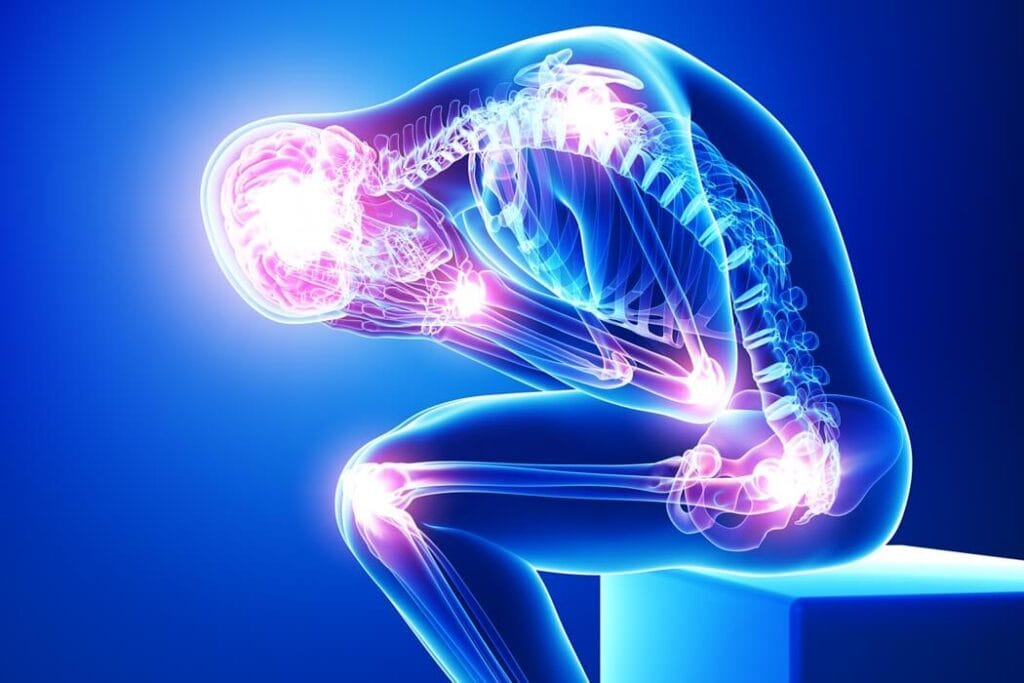
If chronic pain isn’t just about tissue damage, what is it about? The answer is: multiple things. Modern pain science recognises that pain is a complex, multifactorial experience influenced by biological, psychological, and social factors. This is often called the biopsychosocial model.
Biological factors include tissue health, strength, fitness, movement capacity, sleep quality, and general health. These matter, but they’re not the whole picture.
Psychological factors include stress levels, mood, beliefs about pain and injury, fear of movement or re-injury, previous pain experiences, and how much attention you’re paying to symptoms. These aren’t ‘mental health issues’ – they’re normal human responses that influence how your nervous system interprets input.
Social factors include work demands, relationship quality, financial stress, access to healthcare, cultural beliefs about pain, and support networks. These shape the context in which you experience pain, and context matters.
All of these factors influence the nervous system’s threat assessment. When threat levels are high – whether from tissue stress, poor sleep, high stress, fear of movement, or difficult life circumstances – the nervous system becomes more protective. Pain is one way it expresses that protection.
Why ‘Just Rest’ Doesn’t Work
If you’ve been told to rest and avoid aggravating activities, you’ve probably noticed it doesn’t solve the problem long-term. You might feel better initially, but as soon as you return to normal activity, symptoms come back.
This happens because rest doesn’t address the underlying issue. It might reduce symptoms temporarily by reducing load, but it also reduces tissue capacity. When you return to activity, you’re placing demands on a system that’s become deconditioned. The tissues are less robust, and the nervous system is still sensitised.
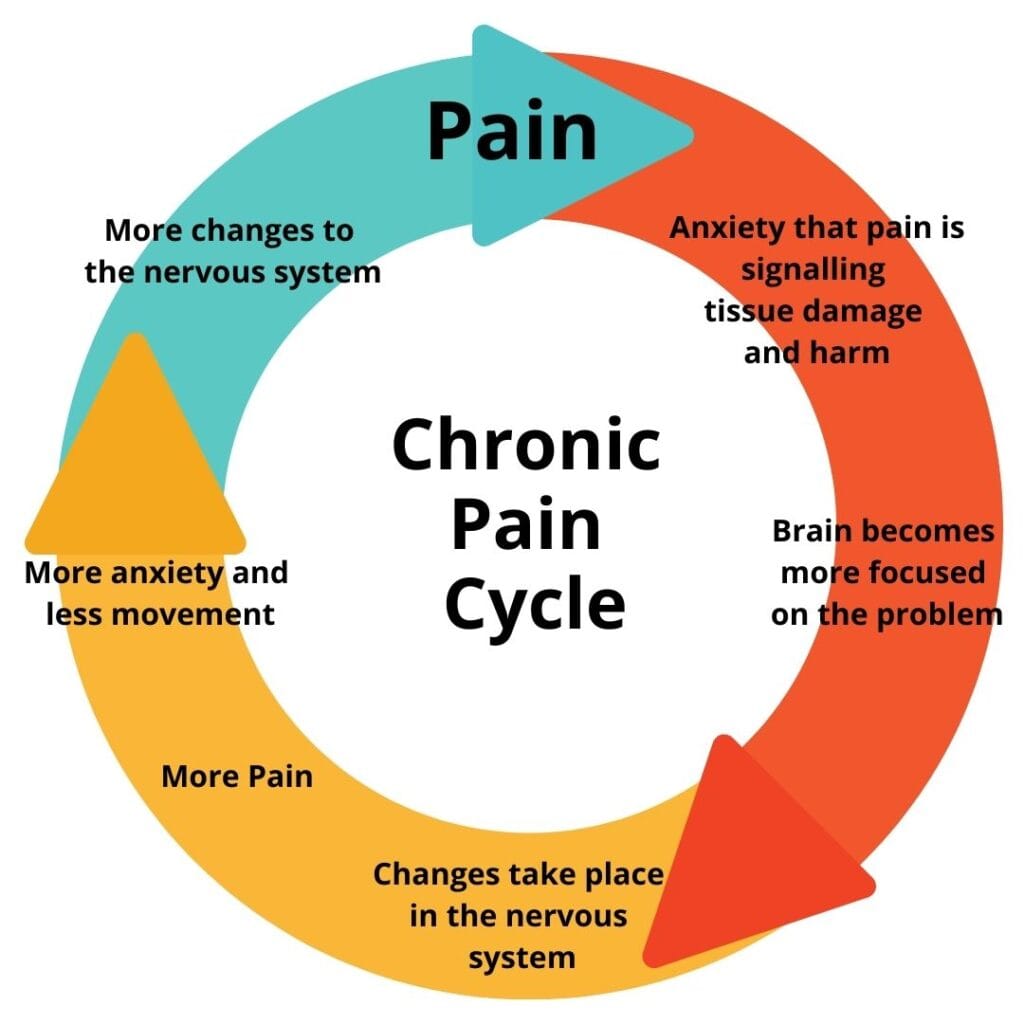
Rest also reinforces the idea that movement is dangerous, which increases fear and avoidance. Over time, this creates a cycle: pain leads to rest, rest leads to deconditioning, deconditioning leads to more pain when you try to return, and the cycle continues.
The solution isn’t to avoid movement – it’s to rebuild tolerance to movement gradually and systematically.
Why ‘Perfect Posture’ and ‘Alignment’ Don’t Solve It
You’ve probably been told your posture is wrong, your pelvis is tilted, your shoulders are rounded, or your spine is out of alignment. The assumption is that fixing these things will fix your pain.
But there’s very little evidence that posture or alignment predicts pain. People with ‘perfect’ posture have pain. People with significant postural variations have no pain. Your body is remarkably adaptable, and there’s no single ‘correct’ way to sit, stand, or move.
This doesn’t mean movement quality doesn’t matter. It does. But the idea that you need to maintain perfect alignment at all times, or that your pain is caused by sitting wrong, is both inaccurate and unhelpful. It creates hypervigilance, increases anxiety around movement, and distracts from what actually helps.
What Does Help
If chronic pain isn’t just about tissue damage, and rest or alignment fixes don’t work, what does?
The most effective approach is graded exposure to movement and activity. This means progressively reintroducing load in a way that builds tissue capacity without overwhelming the system. It’s not about pushing through pain or avoiding pain completely – it’s about finding the right dose.
This requires monitoring your response, adjusting load based on feedback, and progressing gradually. You’re teaching your nervous system that movement is safe, while simultaneously building the physical capacity to tolerate it.
Education is also critical. Understanding why you have pain, what influences it, and what you can do about it reduces threat and changes how you interpret symptoms. Pain that makes sense is less threatening than pain that feels random or unexplained.
Addressing other factors matters too. Improving sleep, managing stress, maintaining social connections, and staying active in ways you enjoy all contribute to reducing nervous system sensitivity. These aren’t just nice-to-haves – they’re part of the equation.
The Path Forward
Chronic pain is frustrating, but it’s not a life sentence. The nervous system that learned to produce pain can also learn to reduce it. That process requires time, consistency, and a framework that respects the complexity of pain without making it feel overwhelming.
The goal isn’t just symptom relief. It’s rebuilding confidence, capacity, and the ability to do the things that matter to you without fear. That doesn’t happen through one treatment, one exercise, or one intervention. It happens through a systematic approach that addresses load, capacity, movement, and context.
Understanding what chronic pain actually is – and what it isn’t – is the foundation. From there, you can build a plan that makes sense, addresses the right factors, and gives you a realistic path forward.